
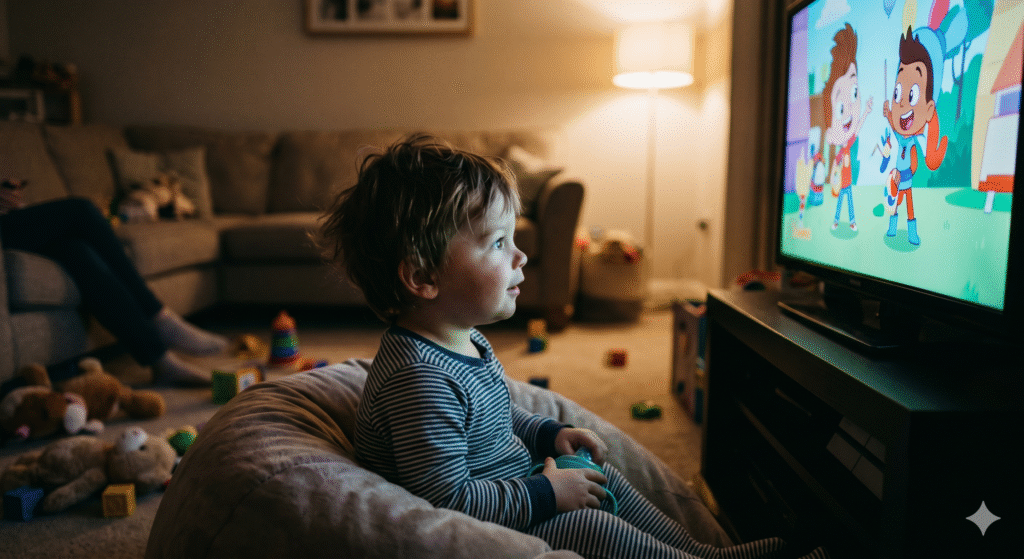
If your child melts down the moment the TV turns off, there’s a neurological reason for it — and new scientific research explains exactly what’s happening inside their developing brain.
With smartphones, tablets, and streaming platforms now a fixture in most homes, children are exposed to shorter, faster, and more stimulating content than any previous generation. In March 2026, the UK government issued updated screen time guidelines for children under 5, directly in response to this growing body of research. Here’s what parents need to understand.
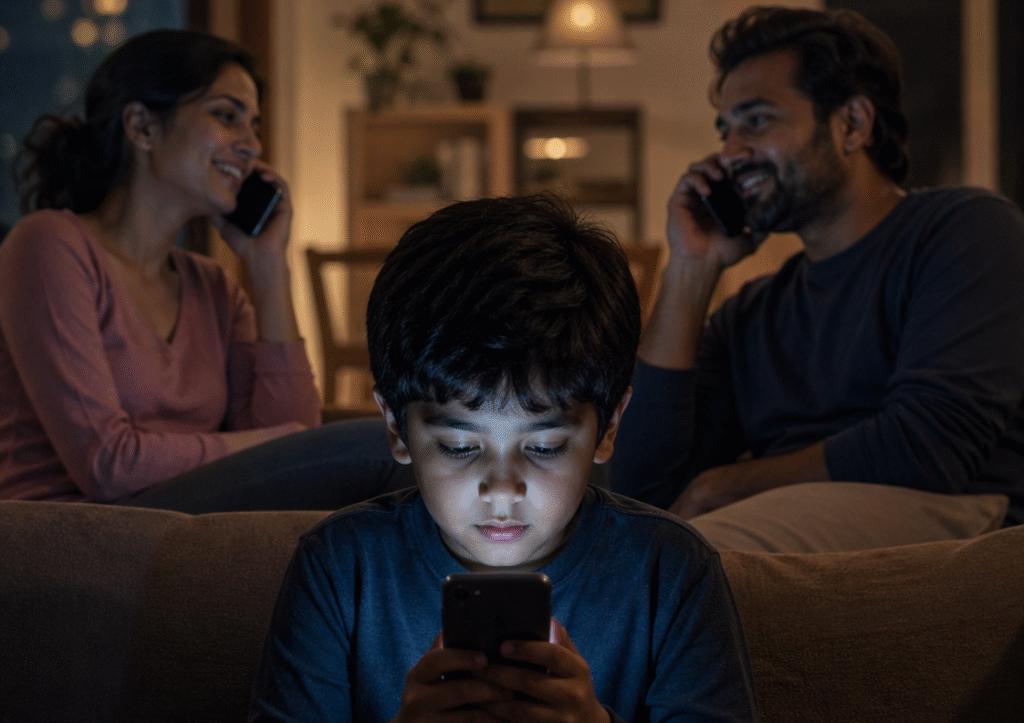
The Science: What Happens Inside a Toddler’s Brain During Fast-Paced Content
Scientists at the University of East London conducted a controlled study measuring toddlers’ eye movement, brain activity, and heart rate while they watched fast-paced video content. The findings were significant.
A toddler’s brain processes incoming information up to 10 times slower than an adult brain. When exposed to rapid scene changes, quick cuts, and high-stimulation visuals, the young brain cannot keep up with the pace of input. This processing overload doesn’t just cause confusion — it activates the child’s sympathetic nervous system, the same “fight or flight” response triggered by a genuine physical threat.
The child appears calm. They’re sitting still. But internally, their heart rate has increased and stress hormones have been released into their body in preparation for a danger that doesn’t exist.
This physical stress response — repeated across months of early screen exposure — helps explain why researchers consistently find a correlation between early TV viewing and later behavioural issues. On average, higher screen time in toddlerhood is associated with greater frequency of tantrums and emotional dysregulation as children grow.
There’s also a compounding problem: using a screen to stop a tantrum makes things worse. When a device is used as a calming tool, children don’t develop their own emotional self-regulation. When the screen is eventually removed, the meltdown returns — often more intense than before.
UK Government Screen Time Guidelines (Updated March 2026)
In response to the research, the UK government released updated advice for families with young children. These represent the most specific government guidance on content type — not just screen duration — to date.
Under 2 years old: No solo screen time. Screens should be limited to shared, interactive activities — such as video calls with family members — where a parent or caregiver is actively present.
Ages 2 to 5: Maximum one hour of screen time per day. Content should be slow-paced and age-appropriate, selected by a parent, and watched together where possible.
All ages: No screens during mealtimes. No screens in the hour before bedtime. Avoid fast-paced, social media-style short-form video. Avoid AI toys and AI-enabled tools for this age group entirely.
The Reality: Why This Is Harder Than It Sounds
Most parents are already aware that excessive screen time isn’t ideal. What makes these guidelines difficult isn’t the information — it’s the reality of daily life.
Screens are, for many families, a practical survival tool. They prevent meltdowns during school runs. They provide 20 minutes of quiet during a difficult afternoon. They allow a parent to cook dinner or take a call without incident.
When the Montastier family in Manchester attempted a week-long screen swap — replacing TV and tablet time with reading, dancing, and outdoor activities — they found the alternatives genuinely difficult to sustain. The activities worked, but they required continuous adult engagement and time that busy routines simply don’t always allow.
There’s also a legitimate counter-argument from some child development circles. Representatives from tech-inclusive parenting organisations point out that AI-enabled tools and digital devices are not going away. Rather than focusing entirely on restriction, they argue, families should focus on finding ways to make technology a positive presence in the home — one that supports rather than disrupts development.
What Parents Can Do: 5 Practical Steps Based on the Evidence
The research doesn’t call for perfection. It calls for awareness and intentionality.
- Audit what your child is actually watching. Fast-paced YouTube shorts and algorithmically-served toddler content carry more neurological load than slow, narrative-driven programming. Programmes like Bluey, nature documentaries, or age-appropriate storytelling content are significantly different from rapid-cut social media-style videos.
- Don’t use screens to stop active tantrums. This is the single highest-impact behavioural adjustment from the research. When a device is used as an emotional off-switch, it bypasses the development of self-regulation. Redirect with a physical activity, a hug, or simply wait it out.
- Watch together when you can. Co-viewing transforms passive consumption into an interactive experience. Asking “what just happened?” or “what do you think that character is feeling?” activates the processing that fast-paced solo viewing bypasses.
- Protect the hour before bed. Screen-free wind-down time directly affects sleep quality. Poor sleep in toddlers is itself a cause of dysregulation and tantrums — it compounds the problem.
- Give yourself permission to be imperfect. These are guidelines, not verdicts. A day over the limit because you had a difficult afternoon does not undo your child’s development. Trend over time matters far more than any single day.
The Bottom Line
The University of East London study and the subsequent UK government guidelines represent a meaningful shift in how we understand screen time — not just as a quantity problem, but as a content quality problem. Fast-paced video doesn’t just occupy a child’s attention. It actively engages their stress response, disrupts emotional development, and makes the transition off screens harder each time.
As technology evolves, these guidelines will need to evolve with it. For now, the evidence supports slowing things down: slower content, more co-viewing, less use of screens as behavioural shortcuts, and appropriate limits on daily duration — especially for children under 2.
The research gives parents a clearer picture. What to do with that picture depends on the family.
Frequently Asked Questions
Is all screen time bad for toddlers?
No. The research specifically highlights fast-paced, high-stimulation content as the primary concern. Slow, narrative-driven programming — especially when watched with a parent — carries significantly lower neurological load. Video calls with family members are explicitly considered acceptable even for children under 2.
Why do toddlers have massive meltdowns when screens are taken away?
Fast-paced content triggers a low-grade stress response during viewing. When the screen is removed, the body still needs to come down from that stress state, which manifests as emotional dysregulation. Additionally, if screens have been used repeatedly to manage emotions, children haven’t developed their own self-soothing skills.
What types of content are considered slow-paced and appropriate for toddlers?
Programmes with slower pacing, consistent characters, and simple narrative arcs — such as Bluey, Sesame Street, or nature documentaries — are generally considered more developmentally appropriate than short-form video content, app-based games, or social media-style clips.