
There’s something quietly magical about watching a little child press a seed into the earth with both thumbs, look up at you with wide eyes, and ask, “Will it grow now?”
That moment — muddy hands, serious face, genuine wonder — is exactly why we took our little ones out of the classroom this Earth Day and into something far more alive.
A Morning With a Different Kind of Classroom
On the morning of Earth Day, UCkids loaded up with water bottles, sun hats, and a whole lot of excitement. Just a short walk from the school, we arrived at a working farm — a stretch of green that felt a world away from the city.
The children stepped into the field and immediately noticed: the smell was different. The ground was soft. There were things growing everywhere.
What the Children Discovered
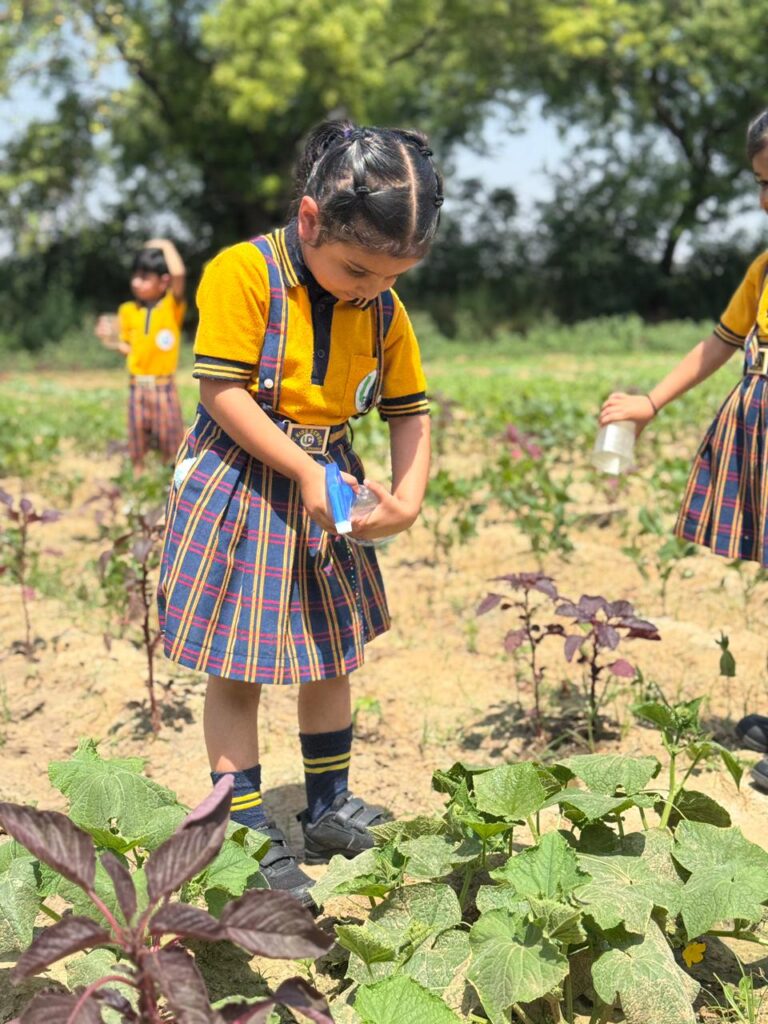
🌿 Roots, Stems, Leaves — Oh My!
Before anything happened, we spent time simply looking. The teachers walked the children through a row of vegetable plants — pointing out the thick stems, the veining on leaves, the way roots hold the soil together. For children who had only ever seen vegetables chopped up on a plate, seeing them grow in the earth was something close to a revelation.
One of our older children (age 7) kept asking: “But how does it know to grow up and not sideways?” — a question that sparked a beautiful, impromptu conversation about sunlight.
🪱 The Creatures Beneath
Digging small holes to prepare for planting meant encountering earthworms — and the reactions were priceless. Some children were hesitant. Others were immediately fascinated. The farmer explained, in the simplest terms, how worms are the earth’s quiet helpers — loosening soil, making it rich, asking for nothing in return.
🌱 Planting Their Own
Each child chose a plant to tend to. Some planted herb seedlings — coriander and mint, plants whose smells they already knew from home. Others planted flowering varieties. Each child was shown how to:
- Dig just deep enough — not too shallow, not too deep
- Place the seedling gently without breaking the roots
- Pat the soil around it firmly, like tucking it in
- Water slowly, close to the base
There was no rushing. The children took this seriously — more seriously, perhaps, than many adults would expect of toddlers and young children. When something is real and alive, children understand the weight of it.
💧 The Job of Caring
Planting, we told the children, is only the beginning. Every living thing needs tending. After their plants were in the ground, the children watered them carefully — learning to feel when the soil was moist enough, learning that too much is as harmful as too little.
Teachers pointed to a few plants that hadn’t been cared for well — yellowed, drooping slightly. Then he pointed to the ones that had. The children noticed the difference immediately. No lecture needed.
What They Brought Home (Beyond Muddy Shoes)
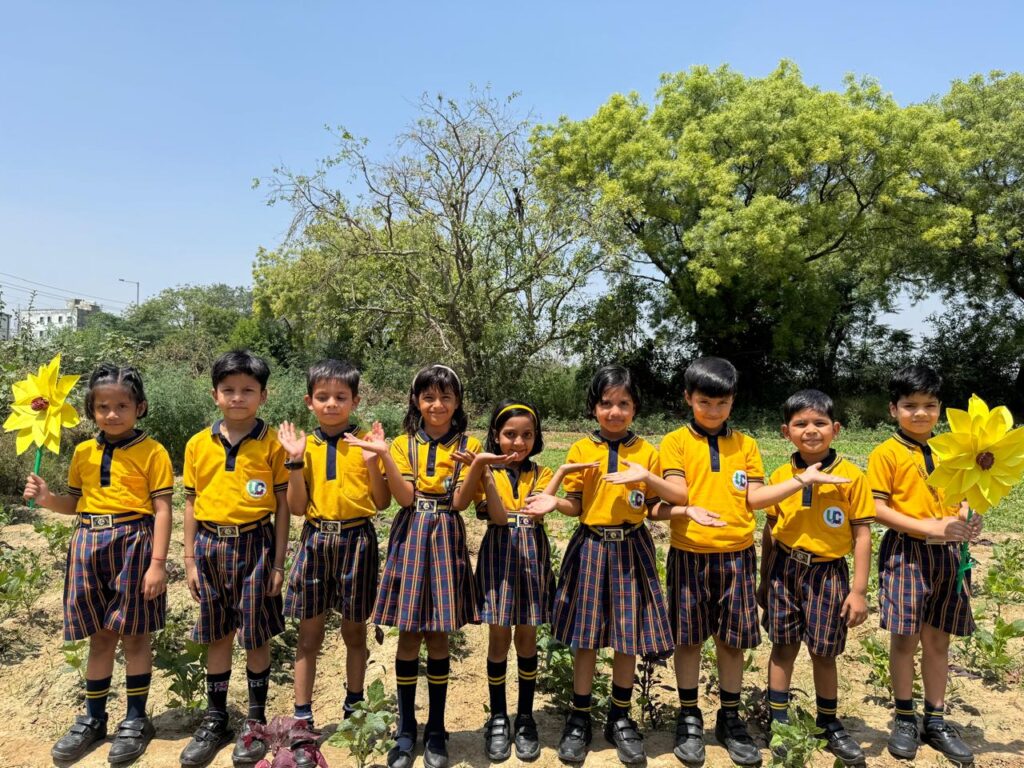
At the end of the visit, each child received a lesson, what they brought home was harder to see and far more lasting:
- The understanding that food doesn’t begin in a packet — it begins in patience and soil
- A new respect for the small creatures (worms, beetles, bees) that most of us overlook and not the others which ruin the vegetation.
- The feeling of doing something real — not pretend, not a worksheet, but real
- And perhaps most importantly, the sense that they can take care of something
Why We Do This
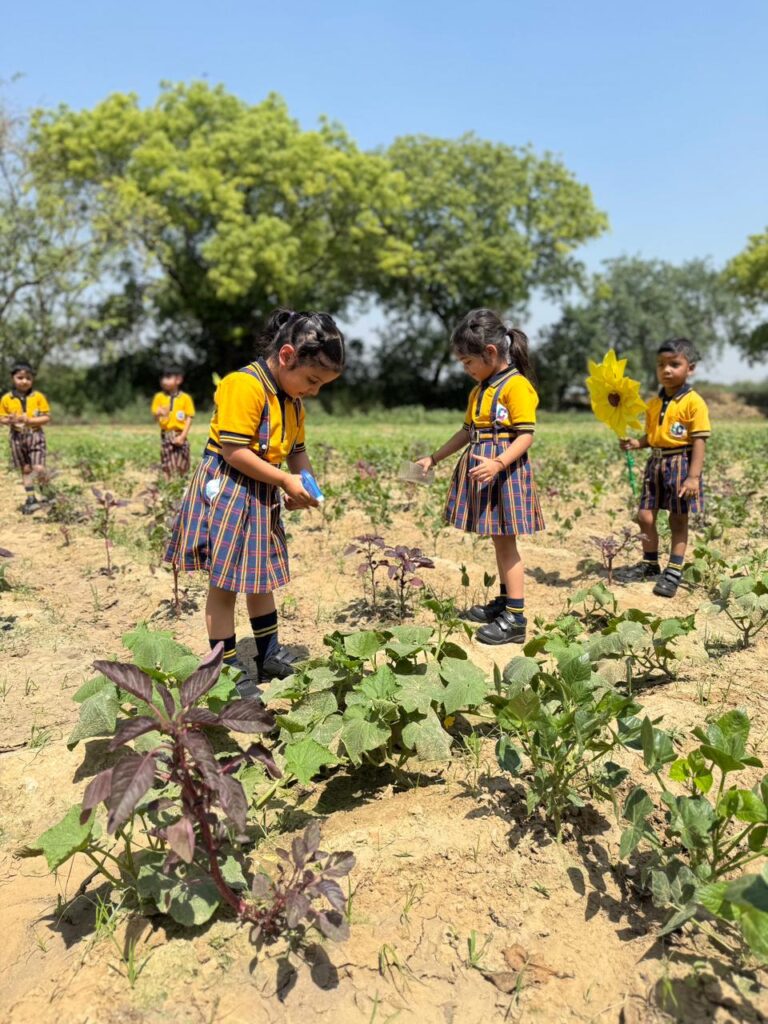
At UCkids, we believe that early childhood is the best time to build a child’s relationship with the natural world. Not through screens, not through diagrams — but through direct, sensory, joyful experience.
A child who has planted a seed and watched it grow carries that memory differently than one who has only read about it. They carry it in their hands.
Earth Day is a reminder for adults to slow down and reconsider how we treat the planet we live on. For children, it can be something even more foundational — a first introduction to stewardship. To the idea that we are responsible for things beyond ourselves.
Our little ones learned that on a farm in New Delhi, kneeling in the soil, with mud in their palms and questions on their lips.
A Note to Parents
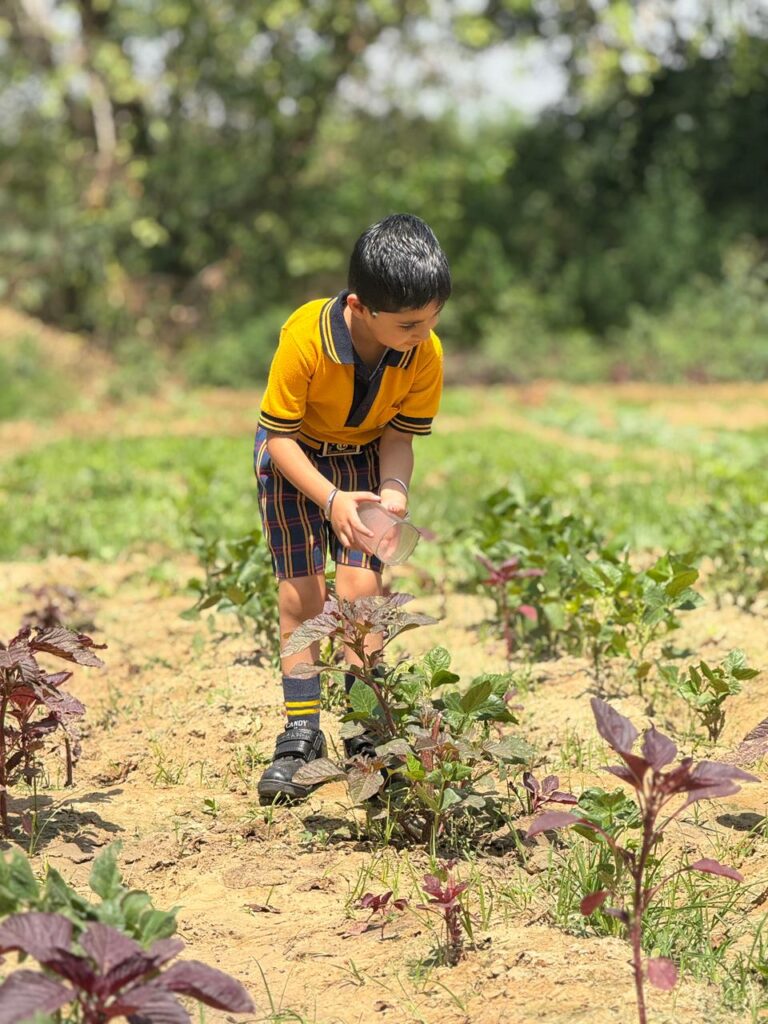
If your child came home talking about plants, seeds, or asking if you can plant something on your balcony — please say yes. 🌿
Even a single pot of coriander on a windowsill can carry the lesson forward. Let them water it. Let them watch it. Let them see that care, over time, becomes growth.
Happy Earth Day from the UCkids family. 🌍
UCkids is a play school in New Delhi for children aged 2–8 years. We believe in learning that is rooted in the real world — literally, when possible.