Healthy Lunch Ideas for Preschoolers | UCkids Monthly Meal Plan — April
Every parent has stood in the kitchen at 7 a.m. wondering: Is this actually good for my child?
At UCkids, we ask that question for every child in our care — not just once, but every single month. Each month, we plan and share a complete, age-appropriate meal calendar with our parent community. This April, as Delhi temperatures begin climbing past 38°C, what goes into a child’s tiffin box matters more than ever.
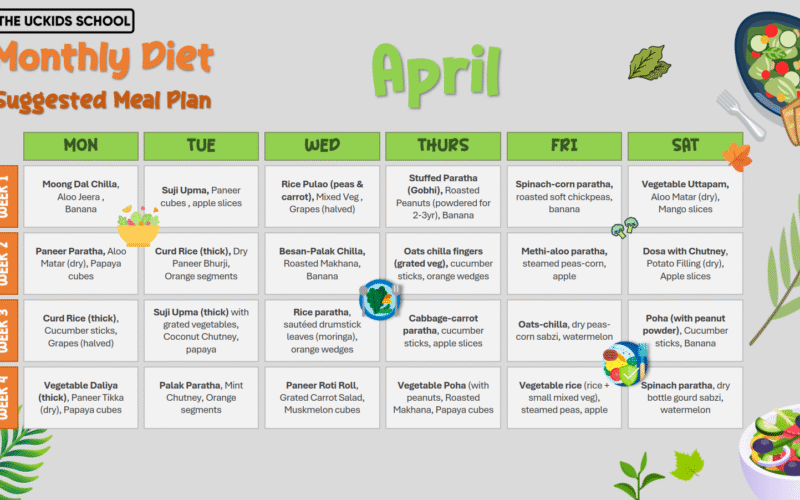
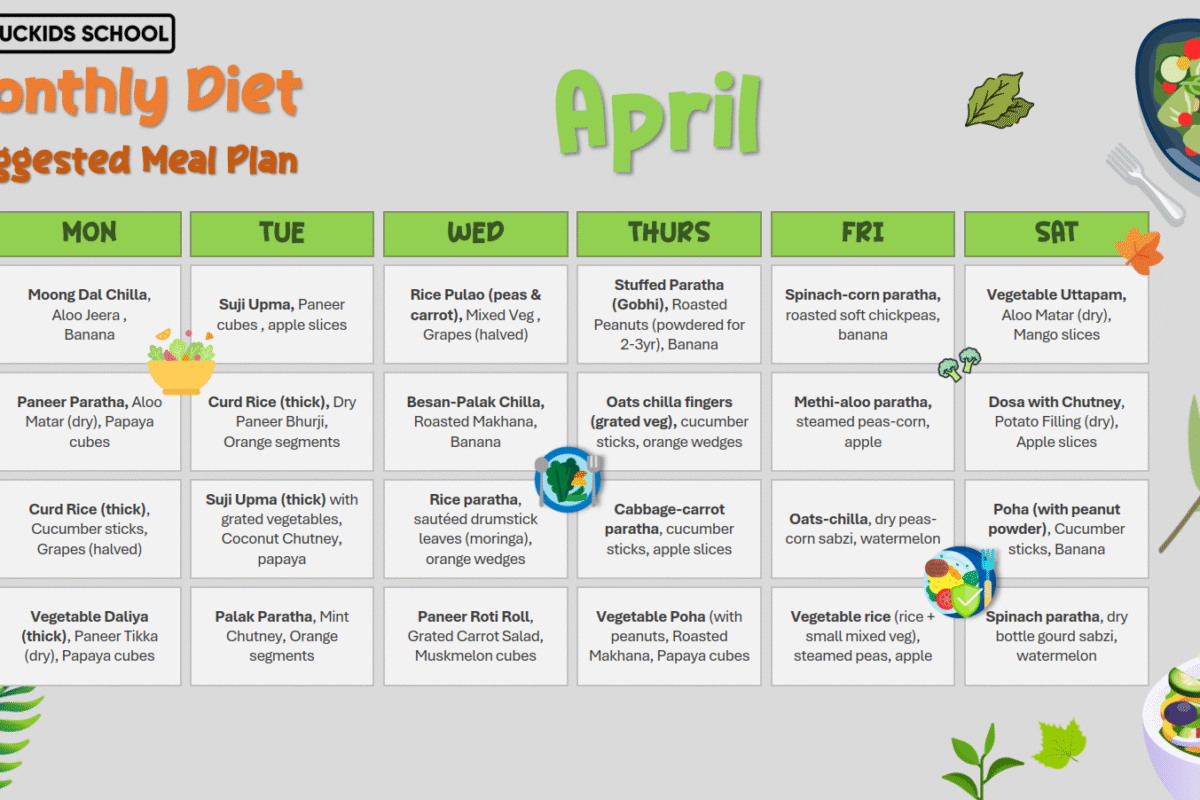
Below, you’ll find our complete April Suggested Meal Plan — including a downloadable PDF — along with the reasoning behind our food choices, portion guidance, and the safety guidelines we ask all parents to follow.
Why a Monthly Meal Plan Matters for Young Children
Children aged 2–8 are in one of the most nutritionally critical phases of their lives. The brain is developing rapidly, physical growth is accelerating, and eating habits formed now tend to stick into adulthood.
But feeding this age group is genuinely tricky:
- Toddlers (2–3 years) have small stomachs, underdeveloped chewing ability, and high choking risk. They need soft textures, small portions, and familiar foods.
- Older children (4–8 years) need more variety, higher micronutrient density, and enough energy to sustain 5–6 hours of active learning and play.
A one-size-fits-all approach doesn’t work. That’s why our plan always distinguishes between these two groups — in portion sizes, food preparation, and texture guidance.
April Meal Plan: At a Glance
Our April plan is built around five core principles:
- Seasonal appropriateness — Summer fruits like mango, watermelon, papaya, and muskmelon replace heavier winter foods
- Nutritional completeness — Each meal combines a grain, a protein, and a fruit
- Practical preparation — Every meal is realistic for a working parent to prepare in under 30 minutes
- Tiffin safety — All items travel well in a closed box at room temperature for 2–3 hours
- Age-differentiated portions — Quantities differ for 2–3 year olds vs. 4–8 year olds
Weekly Highlights from the April Calendar
Week 1: Protein-Rich Beginnings
The week opens with Moong Dal Chilla paired with Aloo Jeera — a combination that delivers plant-based protein and iron in a form even the youngest children can handle. Grapes (halved for safety) and banana round out the fruit servings.
Standout meal: Stuffed Gobhi Paratha + Roasted Peanuts (powdered for 2–3 yr olds) + Banana — peanuts in powdered form are an excellent way to introduce healthy fats and protein without choking risk for toddlers.
Week 2: Dairy + Leafy Greens
Week 2 introduces curd rice as a digestive-friendly base, Paneer Paratha for calcium, and Besan-Palak Chilla — a clever way to sneak in iron from spinach and protein from chickpea flour together.
Standout meal: Methi-Aloo Paratha + Steamed Peas-Corn + Apple — fenugreek (methi) is rich in iron and helps regulate digestion. Steamed peas-corn add a finger-food element that older children especially enjoy.
Week 3: Gut Health + Whole Grains
Week 3 features moringa (drumstick leaves) in a rice paratha — one of the most nutrient-dense greens available in Indian cooking, and particularly appropriate for growing children. Daliya (broken wheat) and Oats Chilla add whole grain variety.
Standout meal: Oats Chilla + Dry Peas-Corn Sabzi + Watermelon — cooling, hydrating, and energy-sustaining. Perfect for April afternoons in Delhi.
Week 4: Iron + Variety
The final week emphasises iron-rich foods: Palak Paratha, Vegetable Daliya, and Poha with peanuts. Makhana (fox nuts) appear as a safe, crunchy snack alternative to chips or biscuits.
Standout meal: Paneer Roti Roll + Grated Carrot Salad + Muskmelon — the roll format is popular with 4–8 year olds who enjoy assembling their own food, which also builds fine motor skills.
Portion Guide by Age Group
Getting portions right is as important as choosing the right foods. Too little and children underperform cognitively by mid-morning. Too much and they struggle to eat, grow anxious, and waste food.
| Food Item | Age 2–3 Years | Age 4–8 Years |
|---|---|---|
| Paratha / Roti | 1 small (torn into pieces) | 1–1.5 regular |
| Rice / Pulao | 3–4 tablespoons | ½ to ¾ cup |
| Sabzi / Dal (dry) | 2–3 tablespoons | 4–5 tablespoons |
| Curd (set) | 2 tablespoons | 3–4 tablespoons |
| Fruit | 3–4 small pieces | 5–6 pieces or ½ fruit |
| Chilla / Dosa | 1 small | 1.5–2 regular |
| Upma / Poha / Daliya | 4–5 tablespoons | ½ to ¾ cup |
April-Specific Safety Guidelines
Delhi in April is not the same as Delhi in November. The food safety rules change with the season.
🌡️ Use Insulated Tiffin Boxes — Always
April temperatures in Delhi regularly cross 40°C. Food in a non-insulated box can spoil within 2 hours. We strongly recommend stainless steel insulated tiffin boxes. Plastic containers — even BPA-free ones — trap heat and accelerate bacterial growth.
🚰 Send a Filled Water Bottle
We encourage water breaks throughout the day, but we depend on parents to send adequate water from home. In summer heat, children aged 2–8 need 1–1.5 litres of water during school hours. A cold, sealed bottle is the single easiest way to protect your child’s health in summer.
✂️ Choking Safety is Non-Negotiable
- Grapes must be cut into quarters — never halved
- Whole nuts should not be sent for children aged 2–3 years; use powdered instead
- No hard candy, popcorn, or chikki under any circumstances
- All fruits should be cut into small, bite-sized pieces before packing
❌ No Packaged or Junk Food
Please do not send chips, biscuits, packaged juices, chocolates, noodles, or deep-fried food. These items have no place in a child’s school lunch and create peer pressure dynamics that affect other children’s eating.
⚠️ No Liquid Foods
Soups, thin dal, runny curries, juice, and curd drinks are not suitable for school tiffins. All items must be dry or thick in consistency. Liquid foods create spillage, hygiene issues, and discomfort for young children eating independently.
🥜 Always Declare Allergies in Writing
If your child has a food allergy — nuts, dairy, gluten, or anything else — please inform the school in writing and label the tiffin box clearly. We cannot take protective action if we don’t have this information.
A Note on How to Use This Plan
This meal plan is a suggestion, not a mandate. We know that every family has its own food culture, preferences, and constraints. Our goal is to offer a nutritionally sound reference — not to override a parent’s judgment.
If your child has specific medical dietary needs, please consult your paediatrician before making changes based on this plan.
If a meal on the calendar doesn’t work for your family this week, swap it for something with a similar nutritional profile — a different chilla instead of the one listed, for example, or a seasonal fruit in place of what’s suggested.
The spirit of the plan is: one grain + one protein + one fruit + water. If you hit that every day, you’re doing a great job.
Frequently Asked Questions
Q: Can I send the same meal every day if my child only eats one thing?
A: We understand food preferences in toddlers are often very fixed. Our advice is to keep introducing variety at home in a low-pressure way, while sending a familiar safe meal for school. Gradual exposure at home is more effective than forcing variety at school.
Q: My child doesn’t eat vegetables. What can I do?
A: Several meals in our plan “hide” vegetables very effectively — Besan-Palak Chilla, Vegetable Daliya, and Suji Upma with grated vegetables are good starting points. Grating vegetables finely into a familiar batter is often the most successful approach for reluctant eaters.
Q: Is curd (dahi) safe to pack in summer?
A: Set curd in a small insulated container is fine for 2–3 hours. Avoid sending curd drinks or lassi, which have a much shorter safe window outside refrigeration.
Q: Why no juice in the tiffin?
A: Packaged juices are high in sugar and low in fibre. Even fresh juice removes the beneficial fibre from fruit. Whole fruit — cut into pieces — is always the better choice for children this age.
About UCkids
UCkids is a play school in New Delhi serving children aged 2–8 years. We believe early childhood is about more than academics — it’s about building healthy habits, a love of learning, and a sense of belonging. Our monthly meal plans, activity calendars, and parent communications are part of how we stay connected with families beyond school hours.